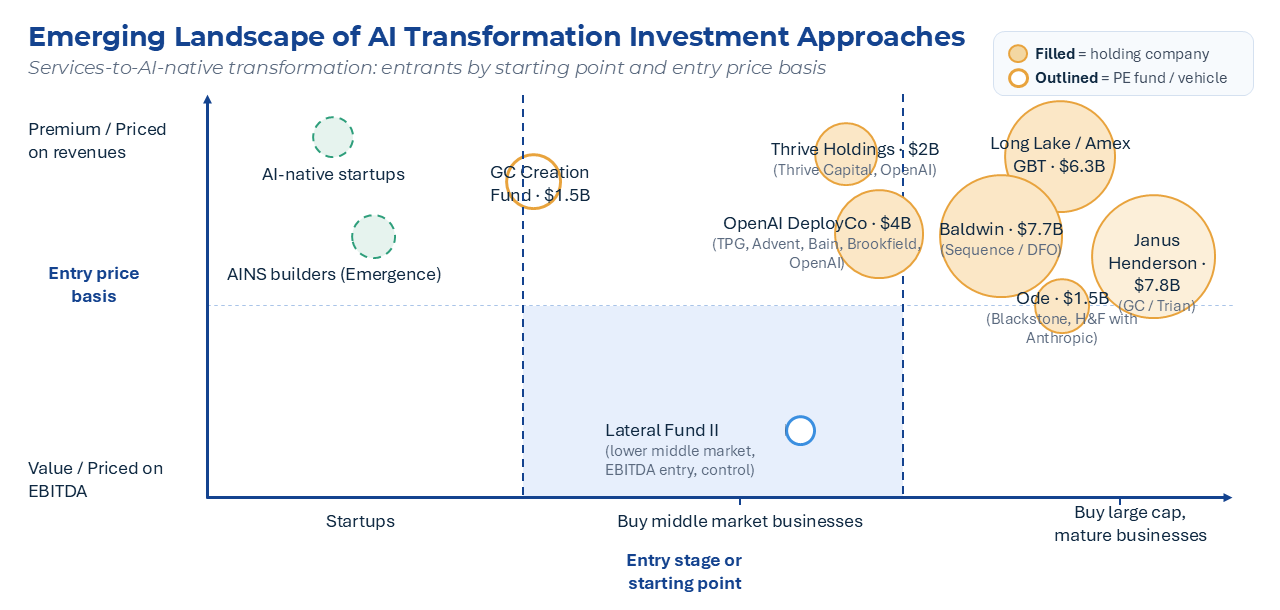
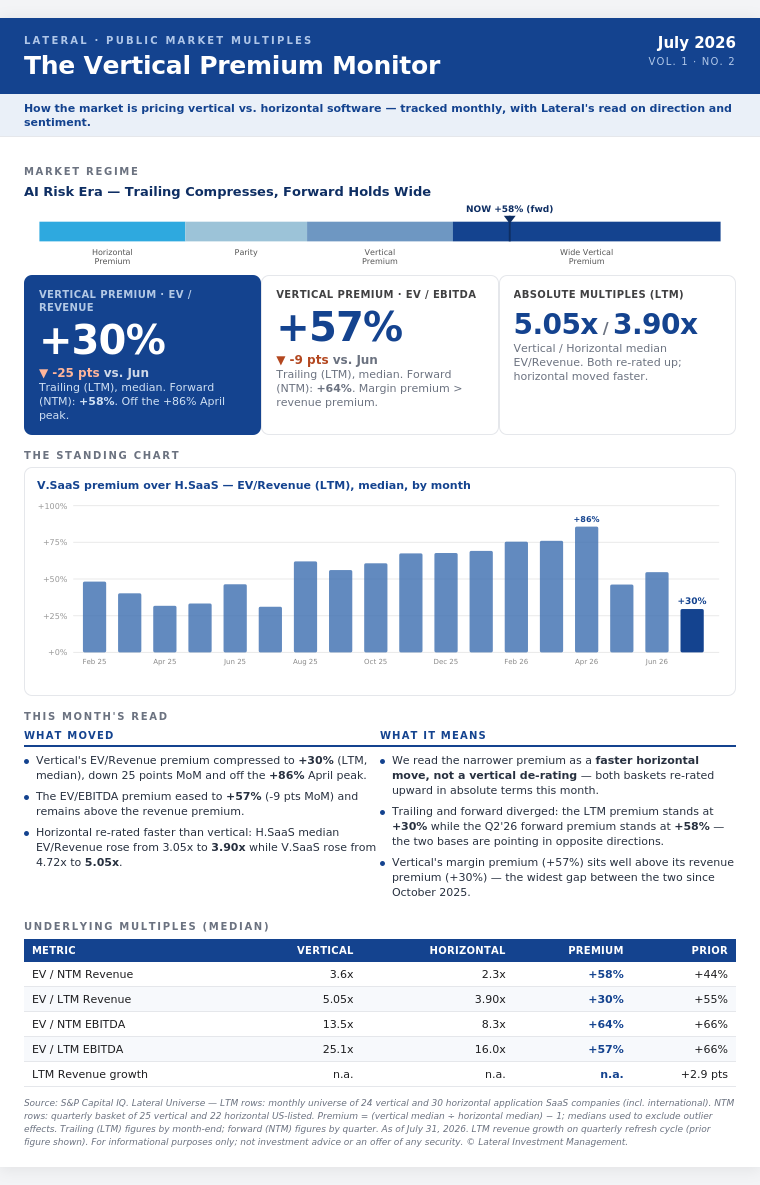
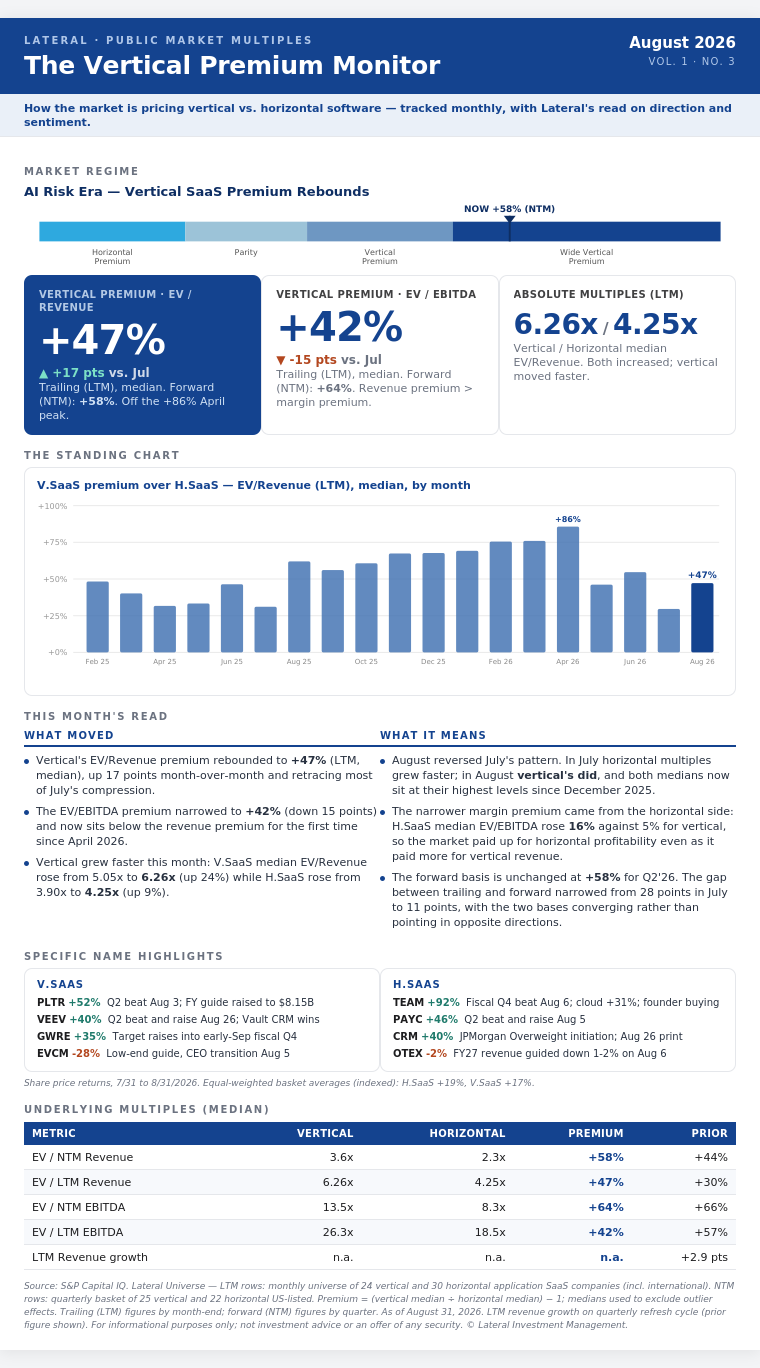
The frontier model layer powering AI applications is getting progressively commoditized with continuous advances across multiple frontier models and open source fast-followers. The innovation race will move to AI applications and the scarce resource then is no longer the incremental quality of inference output. The strategic value grows out of knowing how to train models and how to incorporate their results in a given set of use cases which work for large customers.
Domain expertise is the third pillar of the Embedded Trust Advantage, which turns the first two pillars (Distribution with customers, Proprietary Data) into something actionable and useful. Longstanding customer relationships mean you have trust and are already embedded in the relevant workflows. Proprietary data gives you the differentiated ingredients to train models and bring them into a business use case. Domain expertise is the lens through which that data and the resulting inference becomes insight and that makes vertical AI solutions viable in a high-stakes enterprise business environment.
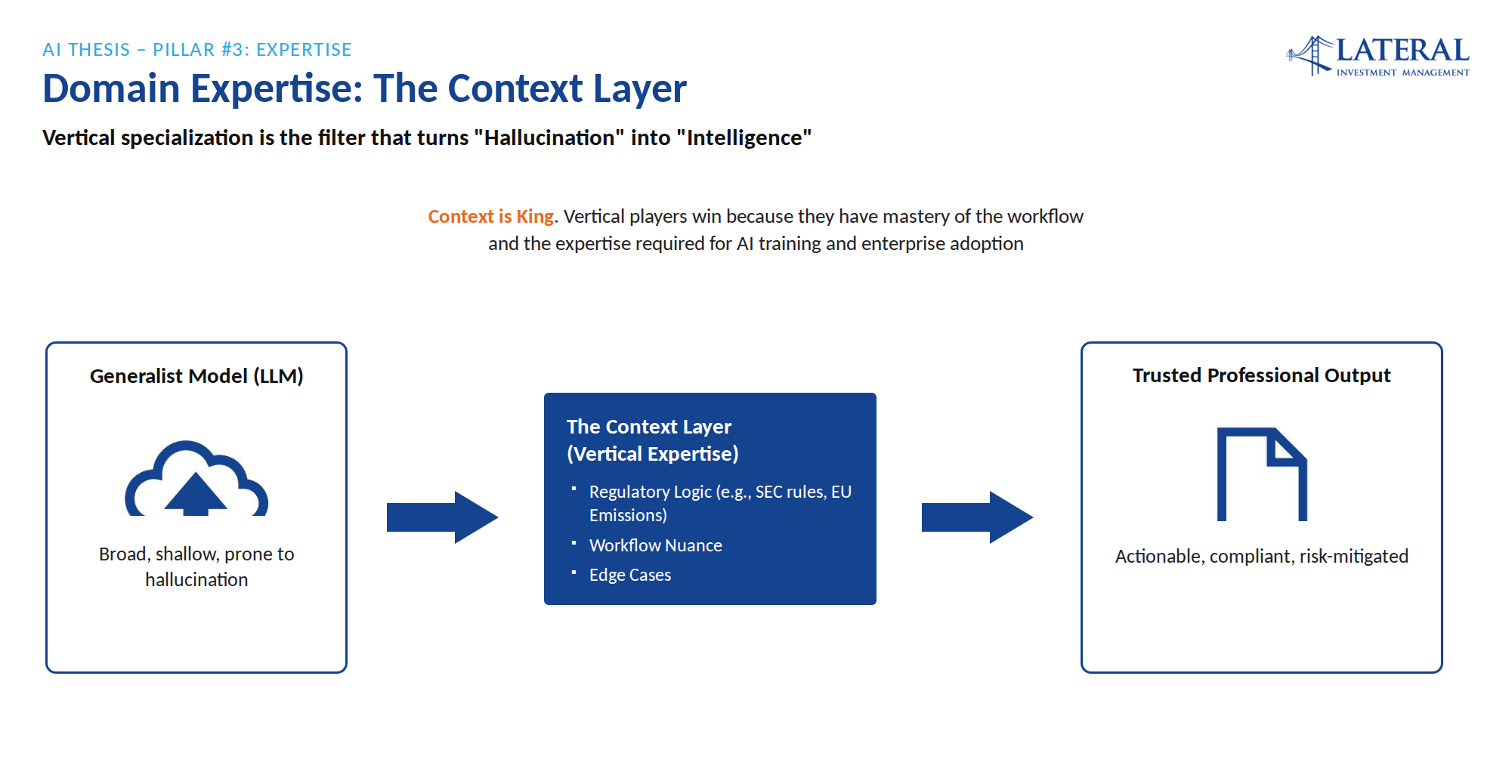
Domain expertise as the context layer between a generalist model and trusted output (Lateral).
What domain expertise looks like up close
Consider a sustainability and energy-procurement consultancy. As a subject matter expert, its edge is a body of knowledge accumulated through years of real engagements. The consultancy navigated a fragmented, shifting regulatory landscape spanning state renewable-portfolio standards, the EU Emissions Trading System, California cap-and-trade, the emerging SEC climate-disclosure rules. It manages carbon-offset portfolios and knows which registries (Gold Standard, Verra, the American Carbon Registry) are accepted by which regulators and which corporate ESG frameworks. It structures Scope 1, 2, and 3 reporting for clients operating across jurisdictions whose measurement methodologies openly conflict.
None of this knowledge and experience can be extracted from a database or learned from a training corpus. The domain expertise was accumulated through client engagements, regulatory interactions, and real-world problem-solving, including the times the answer was ambiguous and getting it wrong carried consequences. That accumulated judgment is what lets the firm deliver the most valuable element in an AI deployment: to tell the difference between where AI creates value and where it creates risk. The distinction is less important in low risk and passive use cases such as automating tariff analysis, flagging regulatory changes, optimizing an offset portfolio. Automating a compliance posture in an ambiguous regulatory environment where there could be a billion-dollar liability waiting to surface and grey distinctions. The criteria or more ambiguous. Knowing the boundaries of known expertise is essential to avoid confident AI judgements based on incomplete information. The shortcomings are not solved by more training data because the results are not deterministic or consistent with past behaviors. Implementing these high-stakes solutions requires a healthy balance of AI inference, domain expertise and human judgement.
Turning the flywheel across the Embedded Trust pillars
We introduced the idea that the three pillars reinforce one another. Vertical domain expertise closes the loop.
| Value drivers | Specific steps |
|---|---|
| Relationships unlock data access | Customers share sensitive information and grant workflow access only to partners they trust. No relationship, no data. |
| Data sharpens expertise | Pattern recognition across thousands of transactions surfaces insights no individual could see alone. The consultant who has analyzed utility bills for 500 commercial facilities spots optimization opportunities that one with 50 engagements would miss. The data makes the experts measurably smarter. |
| Expertise deepens relationships | Clients expand engagements with the provider that understands their business better than anyone else. The broker who called the capacity crunch, the consultant who navigated the disclosure rule before it was enforced. They don't get re-bid; they get more work. |
Each turn makes the next easier, and AI accelerates the whole loop rather than short-circuiting it. Better models raise the return on proprietary data; cheaper automation raises the premium on knowing exactly where to point it; deeper deployments generate more data and more trust. The moat widens precisely as the technology that was supposed to erode it improves.
Domain expertise is also the safety layer
The second reason domain expertise is the decisive pillar, beyond pointing AI at the right problems is risk management to makes the deployment safe enough to run at all. In regulated, high-consequence work, a confidently wrong answer is worse than no answer, and the difference between an output a customer can act on and one that creates liability is judgment about where the model can be trusted and the data-driven confidence levels are reliable. Domain expertise is what designs the boundaries in addition to the goal posts. Which are the decisions the AI can make autonomously? Which can it recommend subject to human review? Which are locked-down to require human judgement? What is the review process that stops bad AI results, whether hallucinations or undesirable outcomes, before they reaches a client or results in an adverse headline or a billion-dollar fine.
That is exactly the quality-assurance discipline established services firms already run as review hierarchies and approval workflows. A startup with a strong model has to invent that safety layer from scratch. The startups appetite for risk and proving results is misaligned with the enterprise business customer. The longtime serivces partner has been operating in a risk management posture, tuned to the client, the regulatory oversight and the historical context, and can adapt it to fit AI use cases. More than just a lens to focus on value, domain expertise keeps the value from turning into disaster.
Not all 'services' business have vertical domain expertise
All vertical services companies do not have domain expertise and those that do not are vulnerable to AI disruption. Consider low-value added services businesses such as VARs, distributors, BPOs, transactional resellers which lack all three pillars. They sit adjacent to the workflow rather than inside it. They rely on inefficiencies such as labor arbitrage and shipping costs, which may be eroded by AI. They are pass-through vehicles for commoditized products or labor rather than subject matter accumulating proprietary data. They rely on the manufacturer's knowledge or the customer's direction rather than developing expertise of their own. Their relationships are transactional, measured in purchase orders rather than years of trust.
Consider a few comparative examples from specific industry verticals. The first example in each comparison is pillar-rich and the second is a pillar-poor intermediary that AI is far more likely to disintermediate than empower. An insurance subrogation firm that investigates claims, determines liability, and negotiates recoveries, accumulating data on carrier patterns and recovery rates, versus an office-supplies distributor that takes orders and ships product. A freight brokerage with a proprietary carrier network and decades of pricing intelligence versus an IT-hardware reseller configuring laptops to manufacturer specs, where the expertise lives with the OEM. An energy consultant navigating multi-jurisdictional compliance versus a staffing agency matching available workers to open requisitions. AI offers differential risk and opportunity for services companies depending on their core competencies.
Whether an established services business has vertical domain expertise is the key question to assess its potential for success as a candidate for transformation into an AI-native vertical strategy. As illustrated below, the answer can be a clear no, but there are many shades of grey. How long have the customer relationships persisted, and through what? Is the data transaction-generated, decision-capturing, and time-dense, or just voluminous? Is the expertise documented and defensible, or does it walk out the door each evening? Pillar-poor ones are the businesses that will get replaced. Pillar-rich businesses are the raw material for durable AI-native franchises.